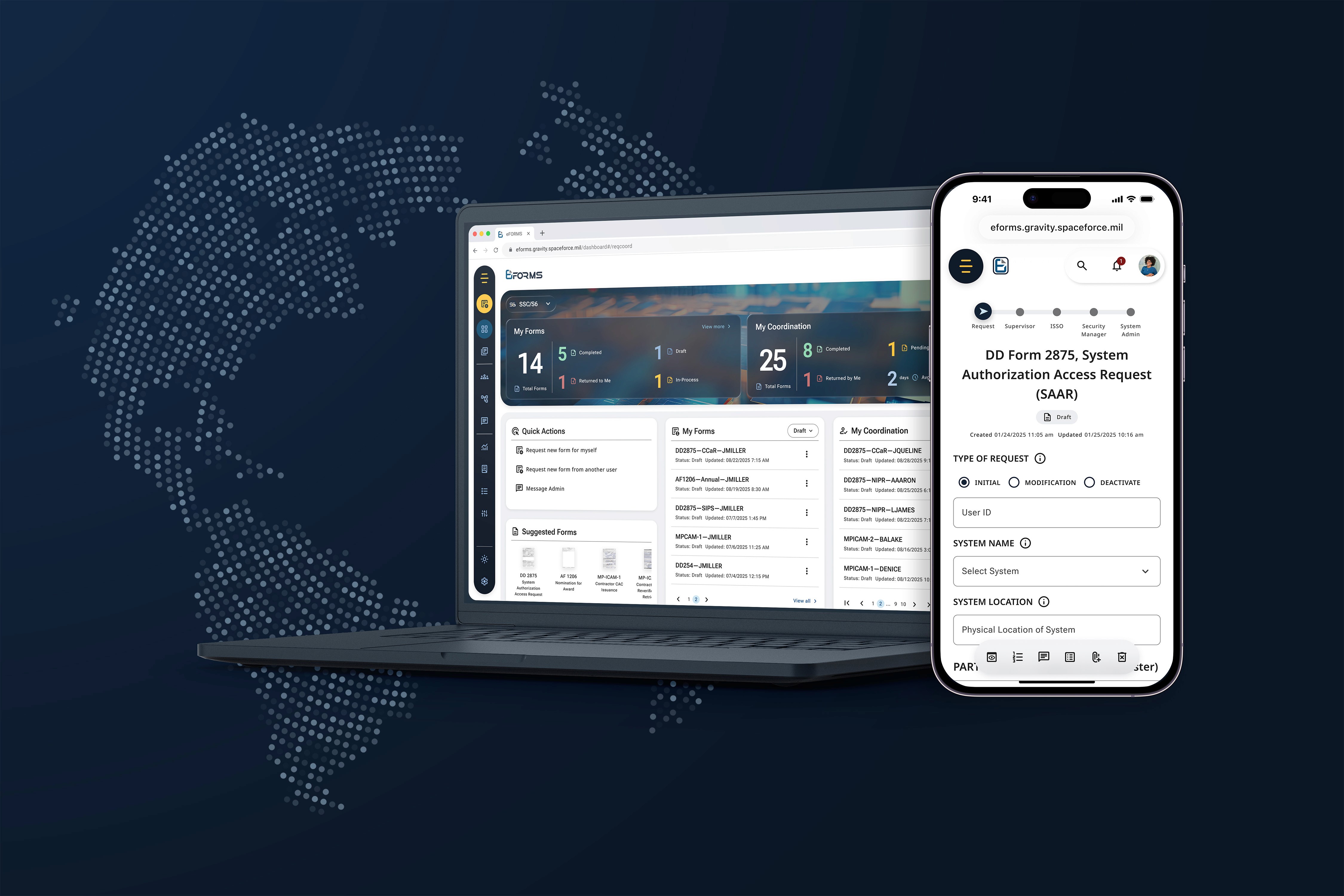
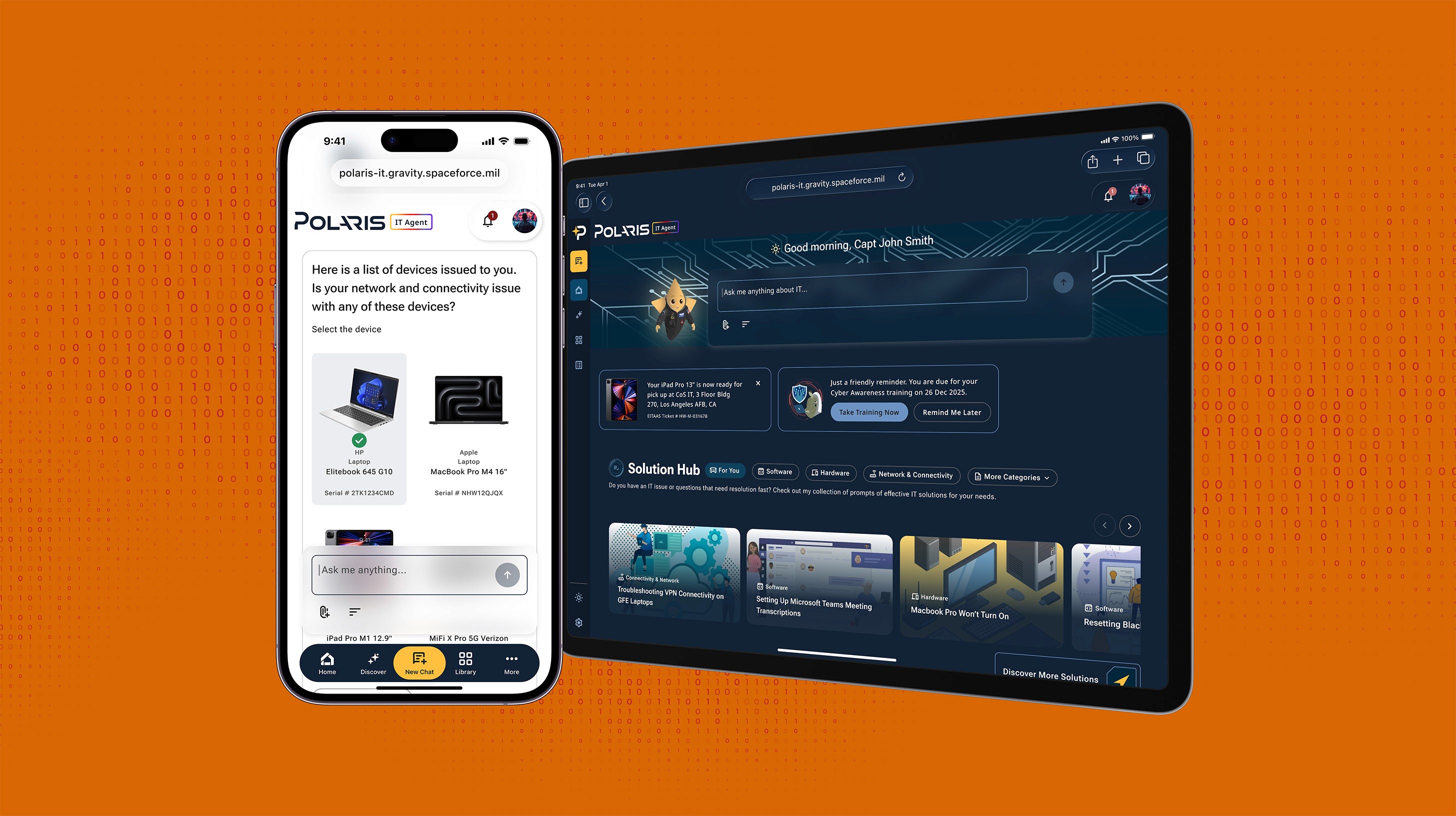
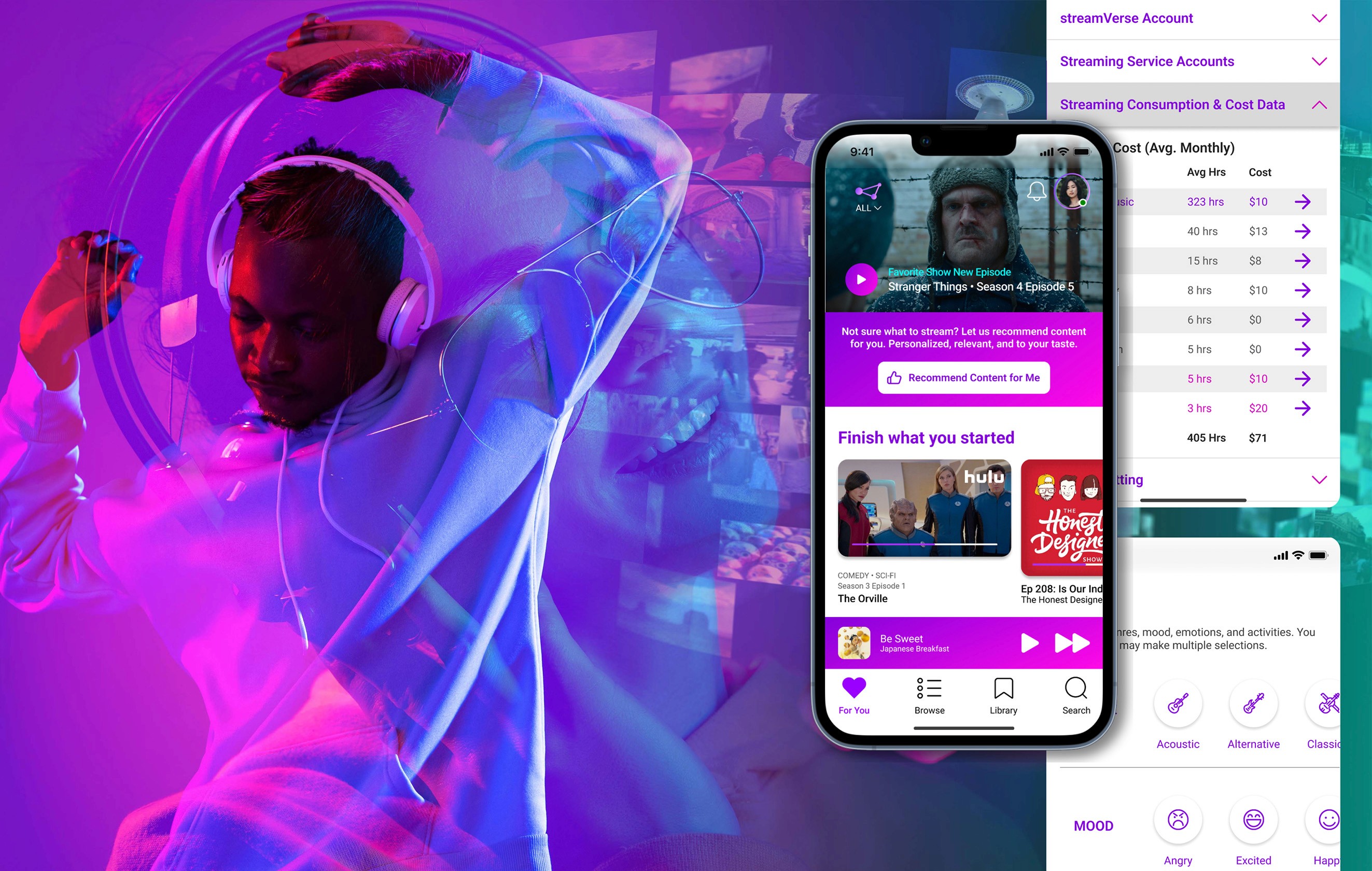
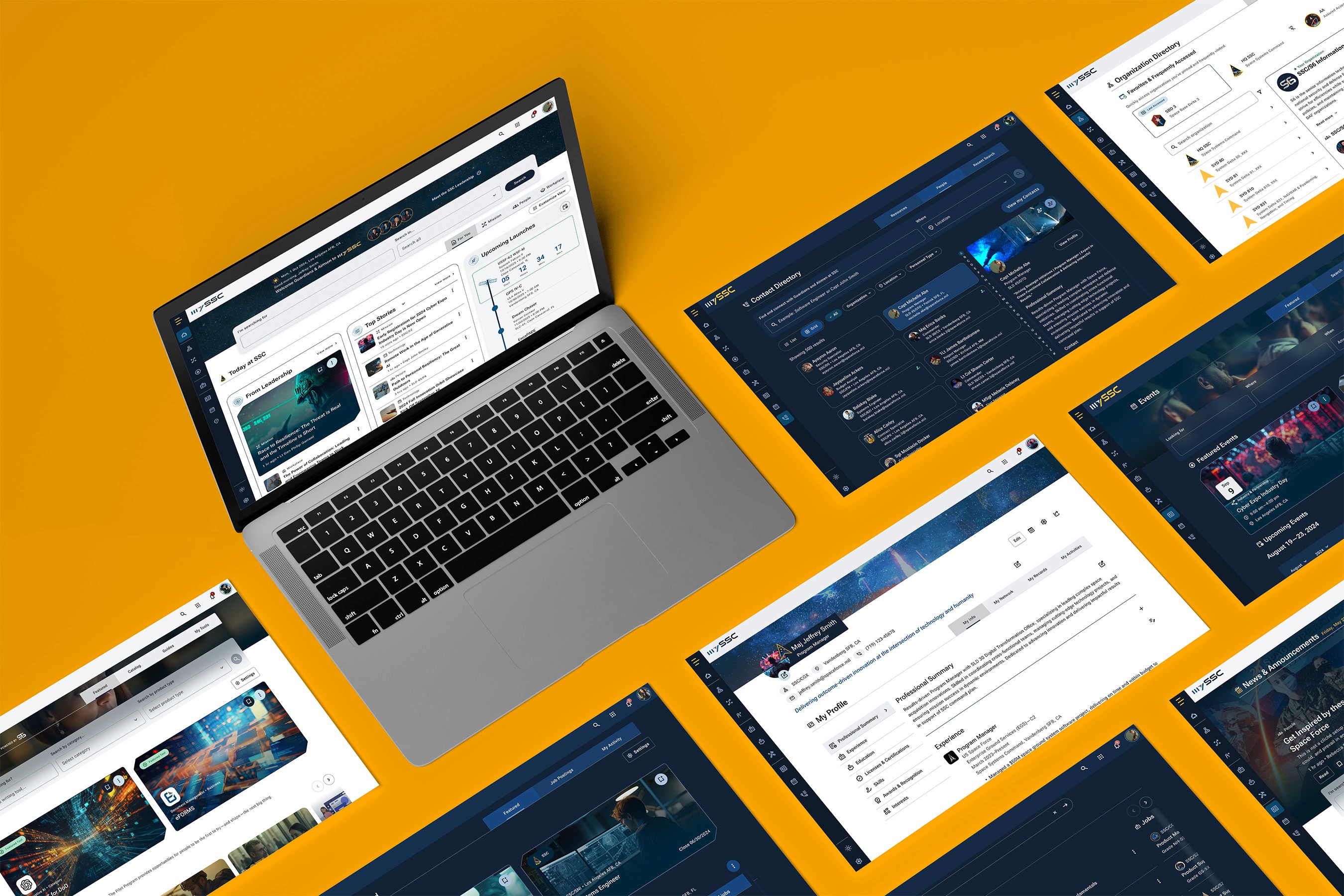
Harness the power of personalized content, centralized access to resources and information. Stay informed with the latest news, events, or connect with Guardians and Airmen across US Space Force's Space Systems Command (SSC). Elevate your workplace experience with mySSC.
00
problem
Key information and resources go unnoticed, knowledge is buried or outdated, and members across SSC feel disconnected due to multiple fragmented, disparate tools and channels. Guardians, Airmen, civilians, and contractors alike miss opportunities to connect with each other and struggle to find information that matters to them. As a result, the command wastes time, misses opportunities for collaboration, and leaves leadership without clear insight into what its members value most.
solution
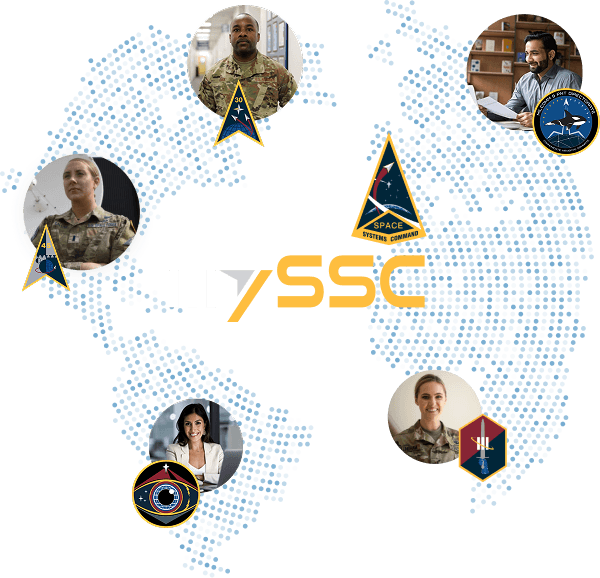
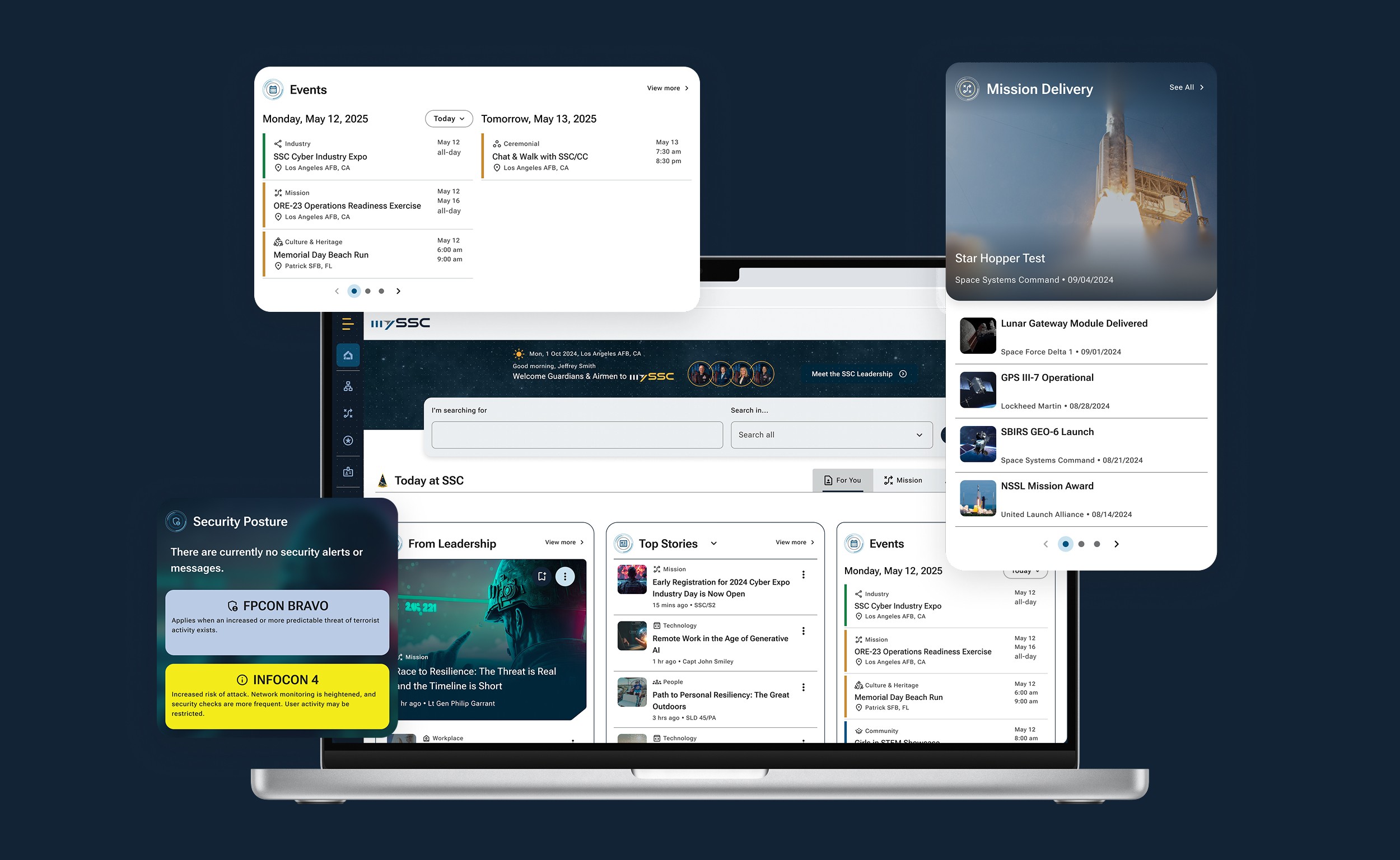
mySSC unifies communication, knowledge, and resources across SSC into a single, accessible hub. By connecting Guardians, Airmen, civilians, and contractors, it ensures members can easily find the information and resources from trusted sources that matter most, engage with one another, and stay aligned across a geographically dispersed command. With greater visibility into organizational needs and priorities, leadership gains the insight to make more informed decisions, while the workforce experiences stronger cohesion, less wasted time, and a clearer sense of connection to SSC’s mission.
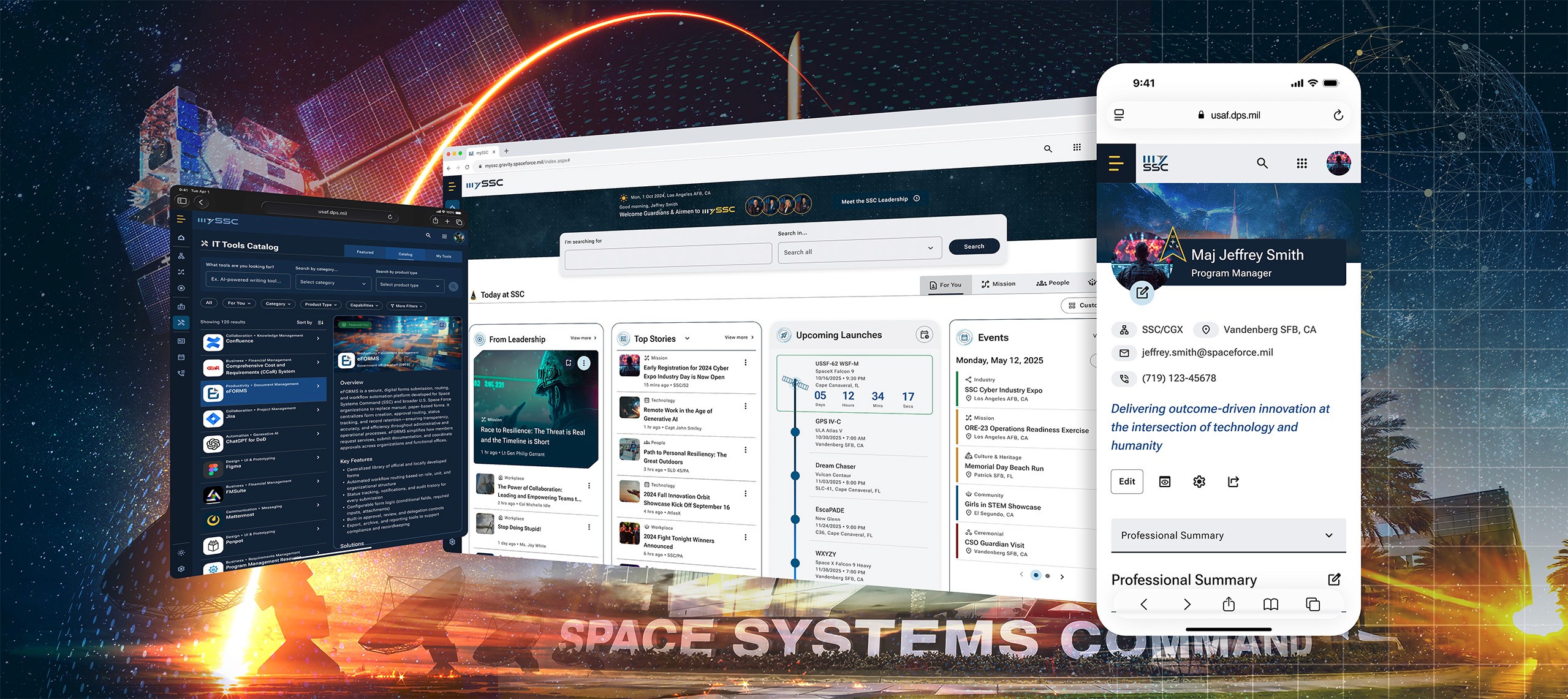
mySSC is an enterprise digital workplace platform for Space Systems Command (SSC) and the United States Space Force, designed to unify communication, resources, and organizational knowledge across a geographically dispersed workforce.
The platform was inspired by a growing problem across SSC: fragmented tools, buried information, disconnected communication channels, and difficulty finding relevant resources or expertise. mySSC was created to centralize trusted information into a single personalized experience that improves discoverability, workforce connection, and organizational cohesion.
As the Lead Product Designer and Product Lead, I helped shape the product vision, UX strategy, information architecture, and long-term platform direction.
Research & Discovery
We traveled across 4 different SSC locations to talk with personnel—military, civilian, and contractor—about their experiences and perspectives. Early discovery efforts revealed a common pattern across SSC personnel.
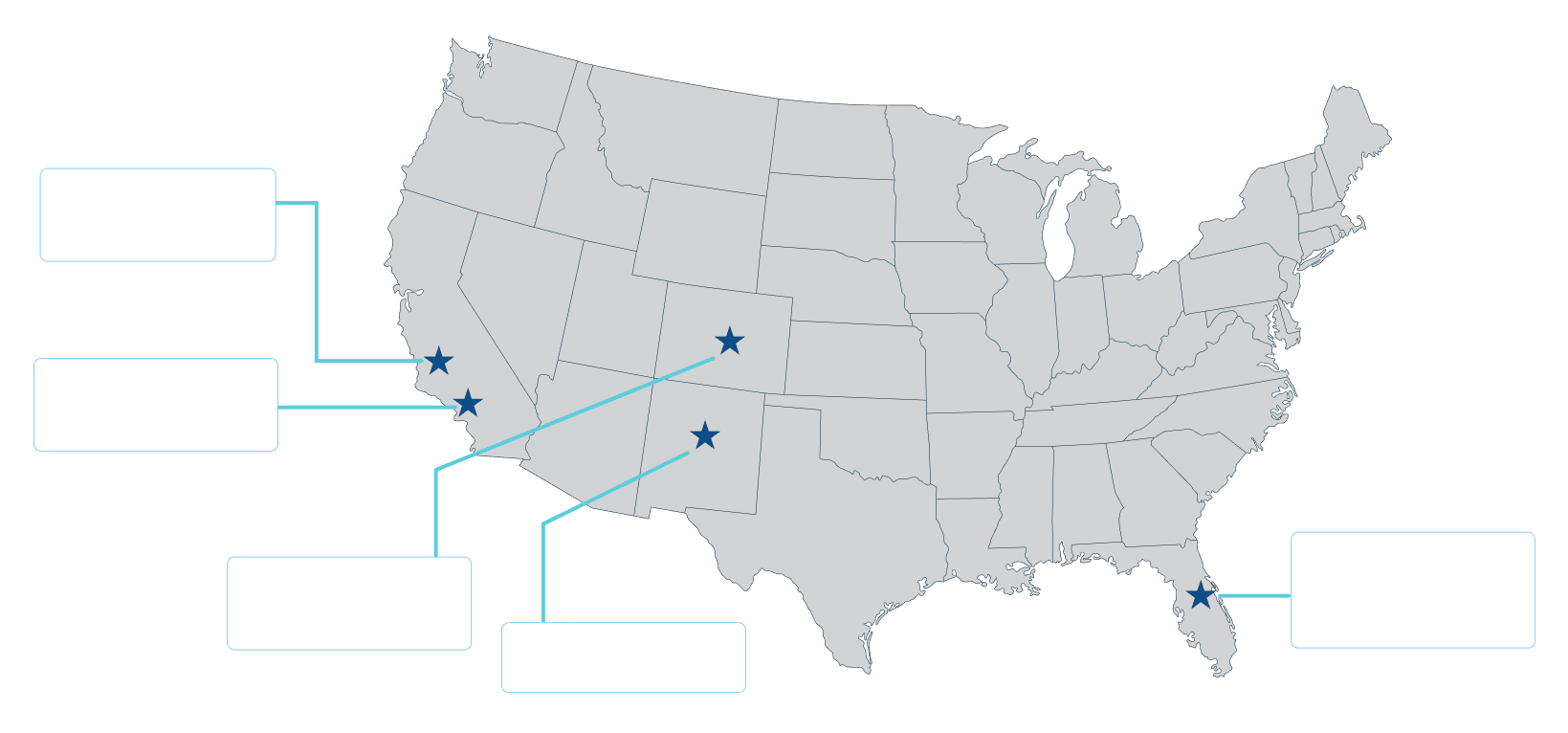
People were spending excessive time searching for information across multiple systems while missing important updates that leadership expected them to see. User and stakeholder research through surveys and interviews identified several recurring themes:
Key Findings
Users wanted a single trusted location for organizational information
Existing communication channels created redundancy and noise
Personnel struggled to identify subject matter experts across SSC
Users desired personalized and relevant information rather than generic broadcasts
Leadership lacked insight into engagement trends and organizational interests
Teams often recreated information that already existed elsewhere
These findings became foundational to the product strategy and platform architecture.
Designing the Experience
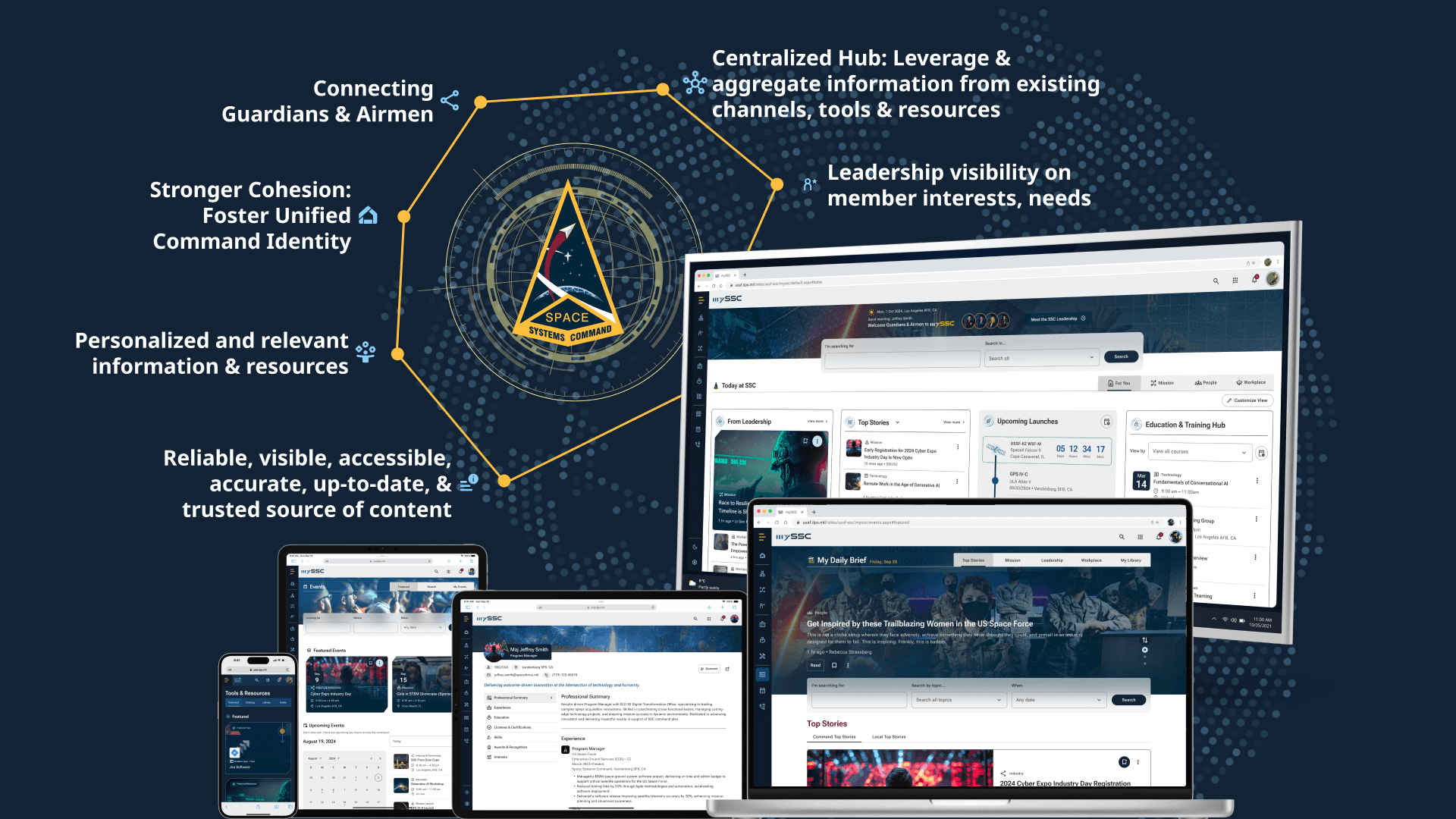
One of the biggest UX challenges was balancing organizational complexity with usability. SSC consists of thousands of users across different roles, responsibilities, and locations. The experience needed to feel useful and relevant to each individual without overwhelming them.
Key UX Focus Areas:

Personalized Experience. Reduce cognitive overload by surfacing relevant content based on user preferences and profile to increase engagement.
Information Architecture and Discoverability. Designed structures and navigation patterns that made it easier to navigate and discover relevant content.
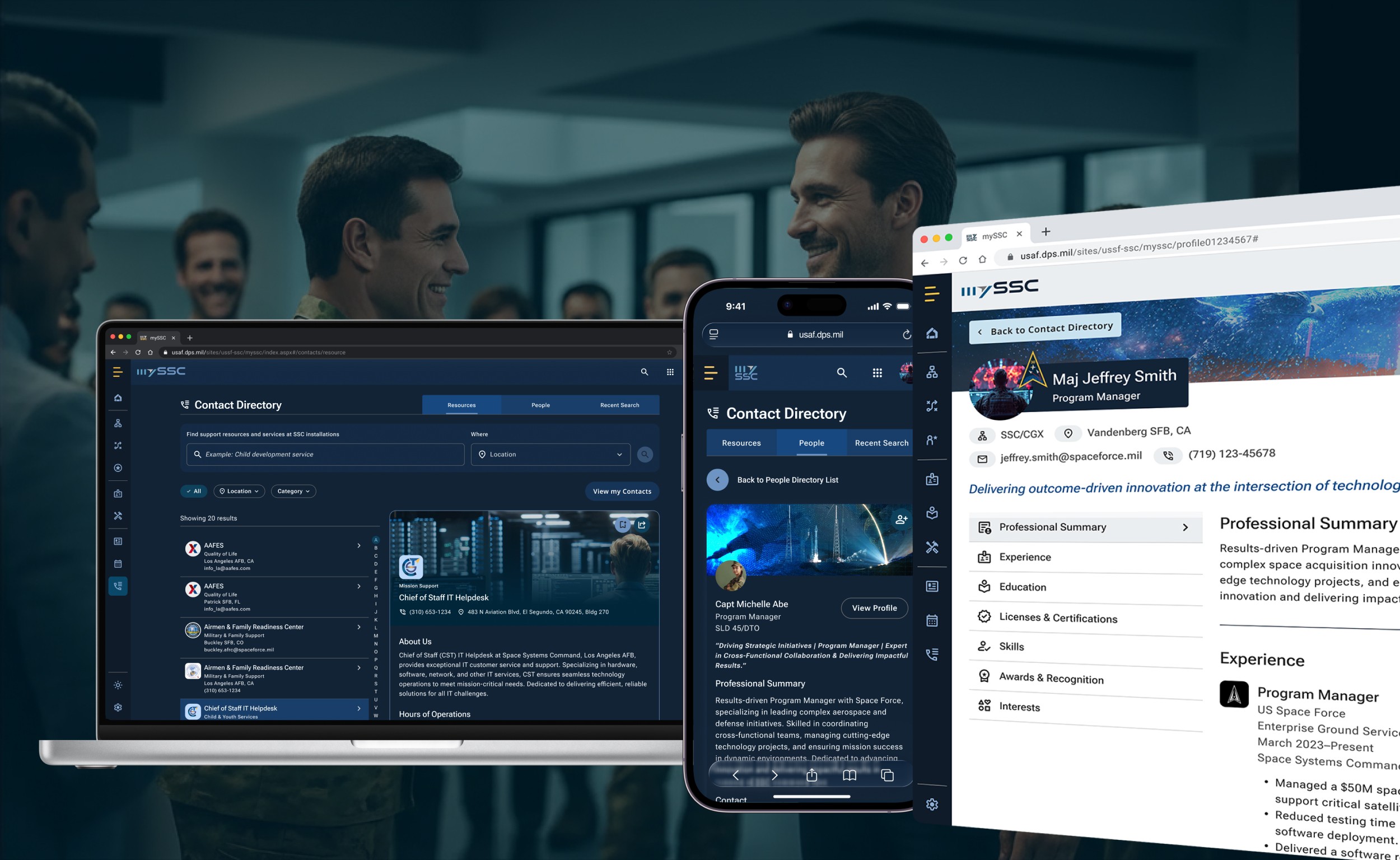
Connection. Instead of relying solely on org charts and existing relationships, we designed a space for people to connect with the right people across SSC.
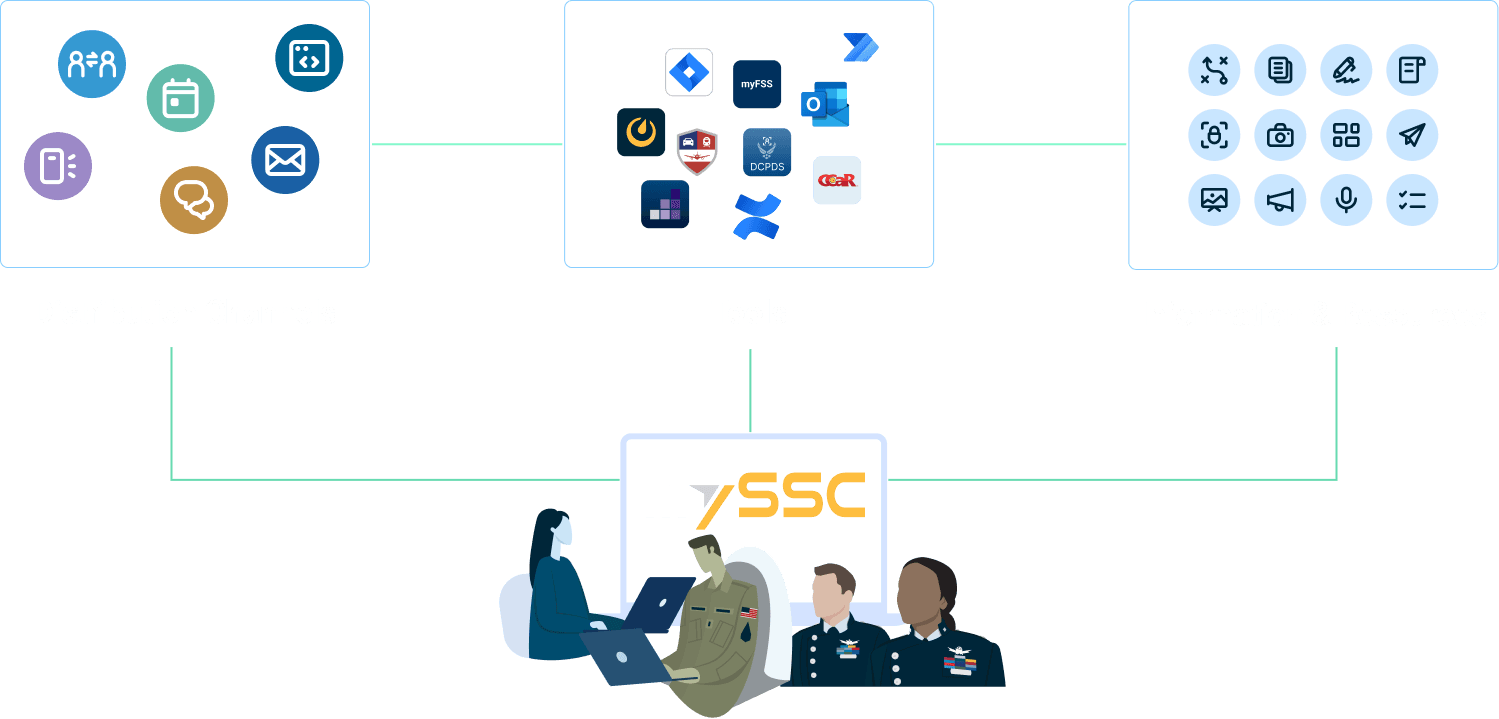
Cross-Platform Integration Strategy. Rather than creating another silo, mySSC was designed as an aggregation and orchestration layer that leverages existing content and data from trusted sources.
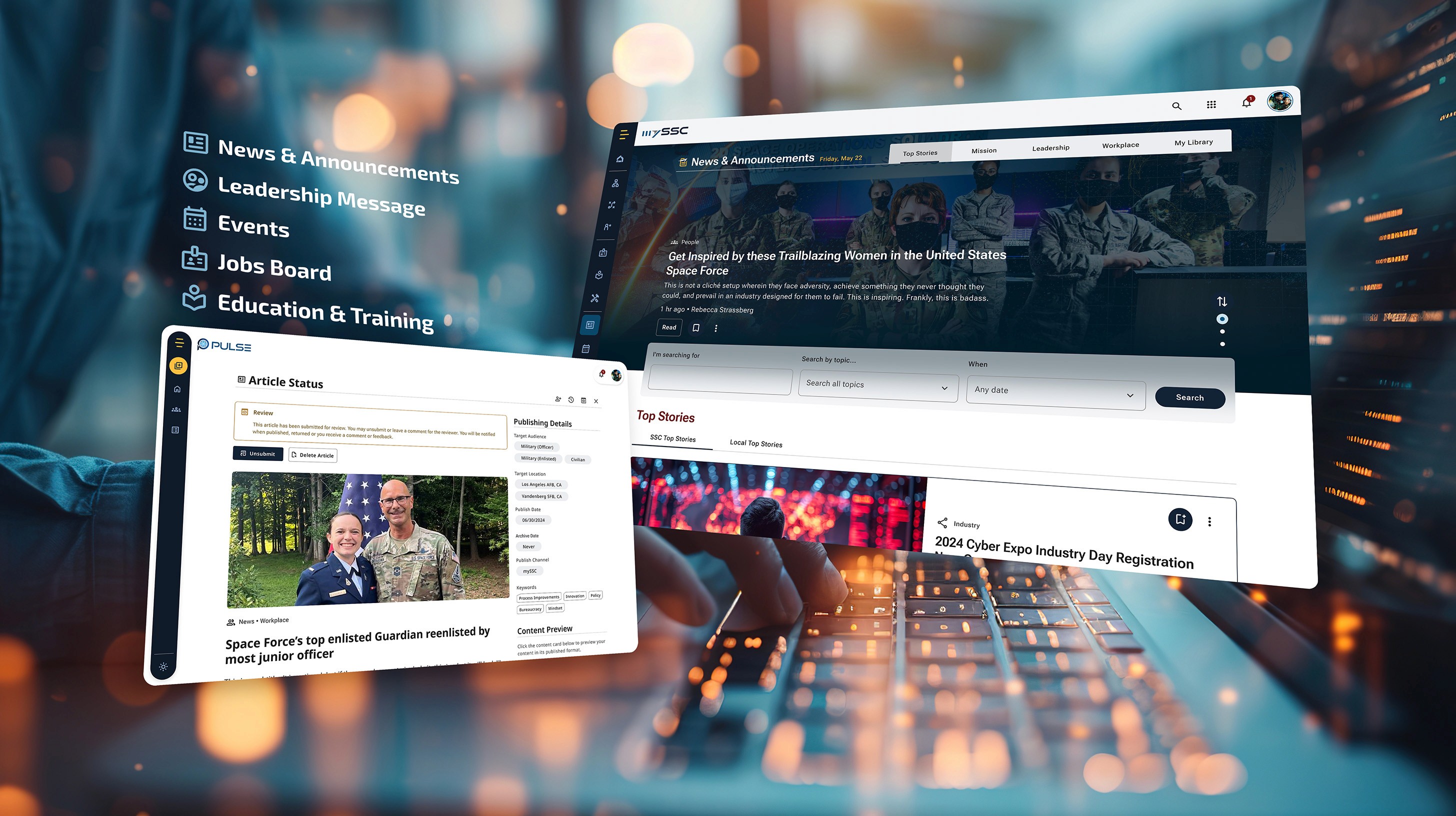
Empowering Voices. We created a content creation tool called Pulse to centralize content distribution across SSC and empower more Guardians to share and communicate with a wider audience.
Challenges: Balancing Complexity with Simplicity
The hardest design challenge was creating a unified experience across a highly complex organization without overwhelming users.
The platform needed to:
Serve multiple user types
Integrate fragmented systems
Scale across future capabilities
Remain intuitive and approachable
This required constant prioritization, simplification, and alignment between user needs and organizational objectives.
Building the Content Engine — Pulse
As mySSC evolved, I recognized early that a content-driven platform would only succeed if teams had an efficient way to create, manage, review, and distribute information at scale. This led me to propose and help shape the vision for Pulse — a dedicated enterprise content creation and management platform built specifically to power mySSC and future digital experiences across the organization.
Rather than embedding content management directly into mySSC, we intentionally developed Pulse as a separate but deeply integrated platform. This decision prevented mySSC from becoming bloated and overly complex, while allowing Pulse to evolve into a scalable publishing and distribution system capable of supporting multiple products, channels, and organizational workflows beyond mySSC.
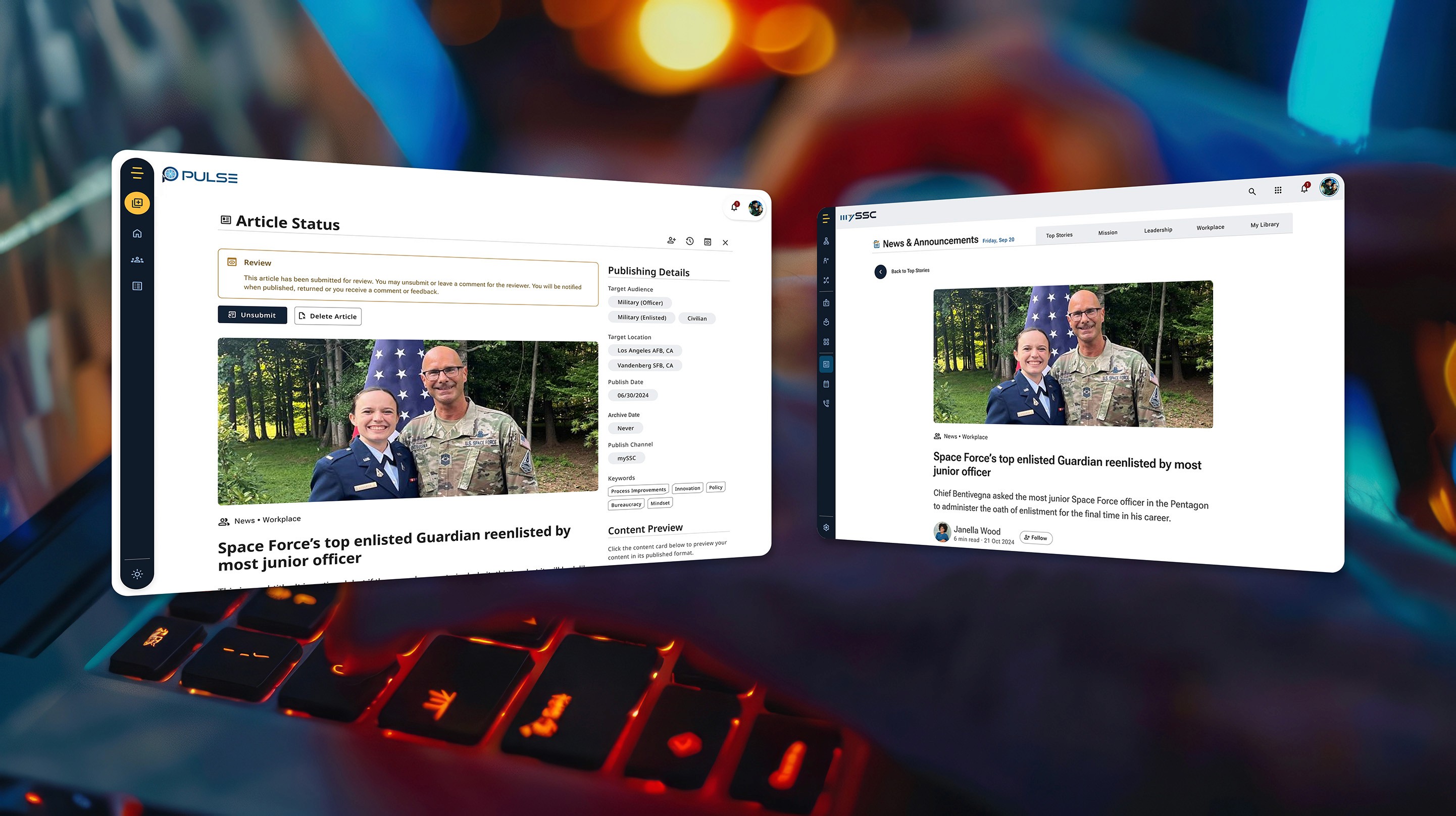
Pulse became critical infrastructure for the ecosystem:
Content creation, review, and publishing workflows
Multi-channel content distribution
Collaboration and approval workflows
Governance, roles, and permissions
Future AI-assisted content operations
Cross-platform publishing architecture
The relationship between mySSC and Pulse was intentionally symbiotic — mySSC delivered the user-facing experience, while Pulse powered the operational engine behind the content ecosystem. One could not effectively scale without the other.
Designing for the Future Without Overengineering
Many planned capabilities — including AI-powered personalization and predictive recommendations — required designing systems flexible enough for future evolution while still delivering immediate value today.
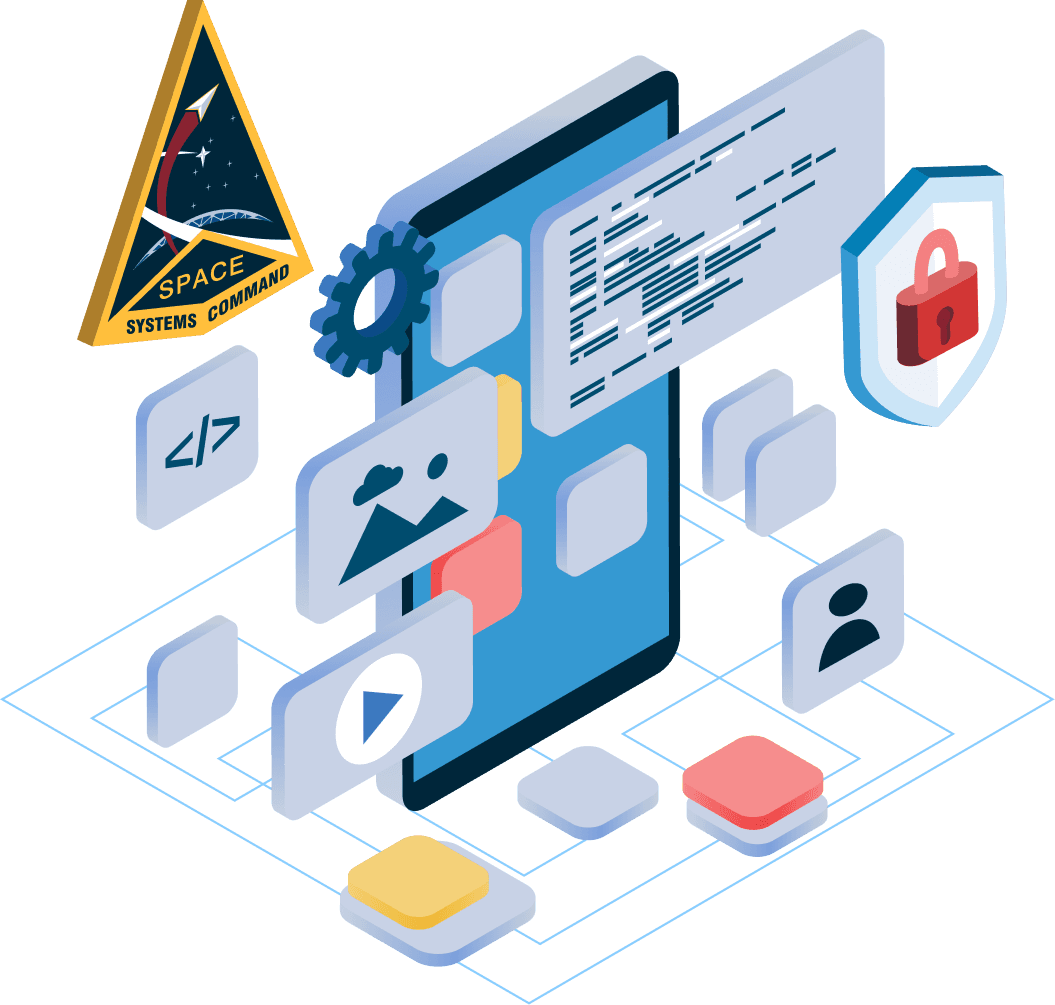
We focused heavily on:
Modular platform thinking
Scalable UX patterns
Ecosystem-oriented architecture
Progressive enhancement over feature overload
Product Impact
mySSC established the foundation for a more connected and accessible digital workplace across SSC.
Outcomes
Reduced friction in finding information and resources
Improved organizational visibility and communication
Increased workforce connectivity and discoverability
Created a scalable foundation for future AI-driven experiences
Enabled leadership insight into workforce engagement trends
Estimated Organizational Value
Productivity Gains
10 hrs
/yr per member
Reduced hours searching for info & resources across multiple channels & sources
Redundant Info & Resource Reduction
10-15%
/yr reduction
Recreating outdated, repeated or duplicated communications and information
Intagible but Valuable
Stronger connection across dispersed workforce → higher morale
Better knowledge-sharing → fewer missed opportunities and alignment
Reflection
mySSC represented more than a design. It is an effort to rethink how a large, distributed organization connects people, knowledge, communication, and mission-critical information into a unified digital experience.

The project strengthened my experience in:
Enterprise UX strategy
Product leadership
Organizational systems thinking
Information architecture at scale
Cross-functional product collaboration
Designing for operational environments
Long-term ecosystem planning
Most importantly, it reinforced a principle I strongly believe in as a product designer:
Good enterprise experiences are not just about usability — they are about reducing friction between people, information, and mission outcomes.
year
2025
team members
Wuan Perkins, TSgt Lee Harder, Paul Miranda, Lindsey Slutz, Edison Ting, James Pardue
role
Lead Product Designer, Product Manager
timeframe
2025 - Active Development
tools
Figma, Figjam, Notion, ChatGPT, Midjourney, MS Teams, Zoom
01
02
03
see also